 by
by When it comes to the excellent quality of the image, I look no way other than Sony’s exceptional camera series; and honestly Sony Alpha series has some infinitely graceful functional aspects that one simply can’t resist.
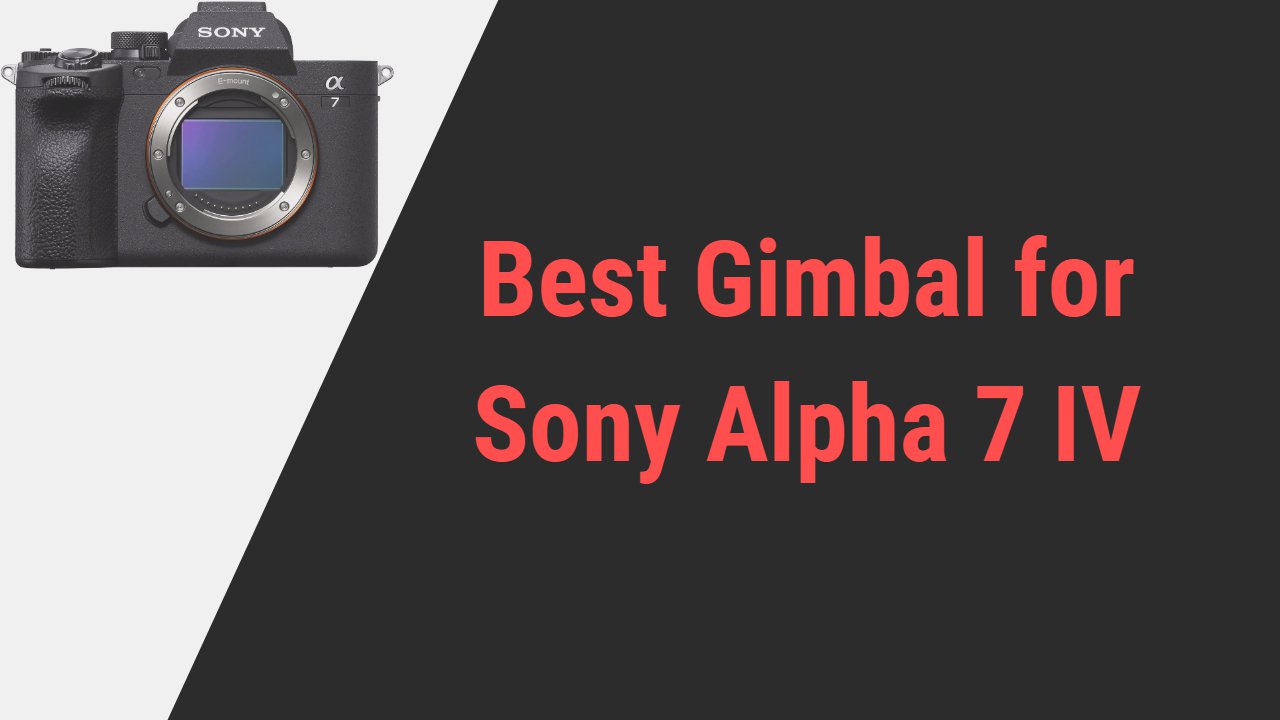
I personally am a fan of the Sony Alpha 7 IV camera. I have been using the same for quite a time now and just want to experiment a little more in such a way that it also benefits my filming skills.
Even with the high-tech A7 IV, I failed to catch that impeccable high-quality shot balance, which got me tuned in to the Gimbal.
As I have experienced, gimbals are the ultimatum for all the jittering and shakiness caused during the shoot; and they are pretty much all about pouring steadiness, balance, and sharpness into the footage.
However, if you want an honest opinion, there are too many gimbal options in the market that can get you all confused. So saving you from all that unnecessary hassle, I have brought the list of some extraordinary gimbals with excellent potential and features, all those that have been used personally by me, waiting to enhance your filming charm.
Sony A7 IV
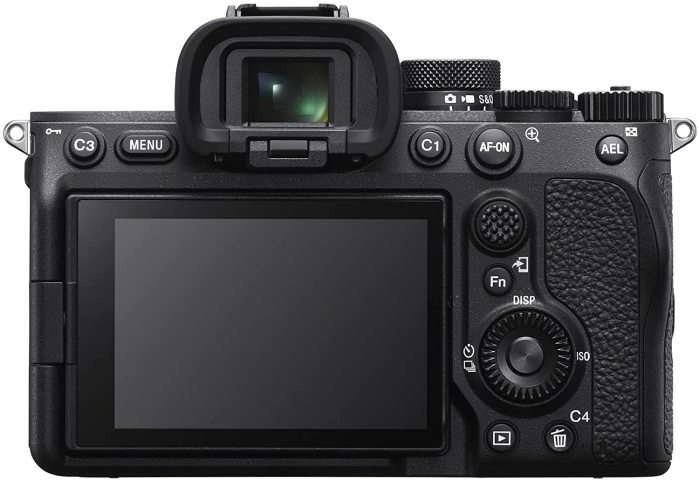
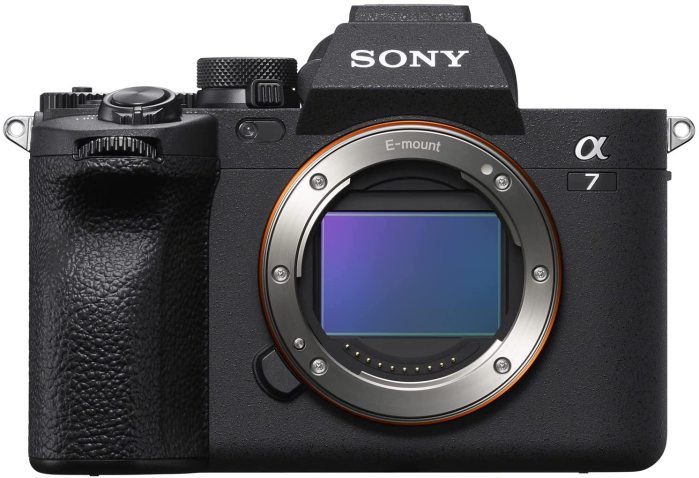

Note:
All the gimbals mentioned here are tested with Sony A7 IV and work perfectly fine.
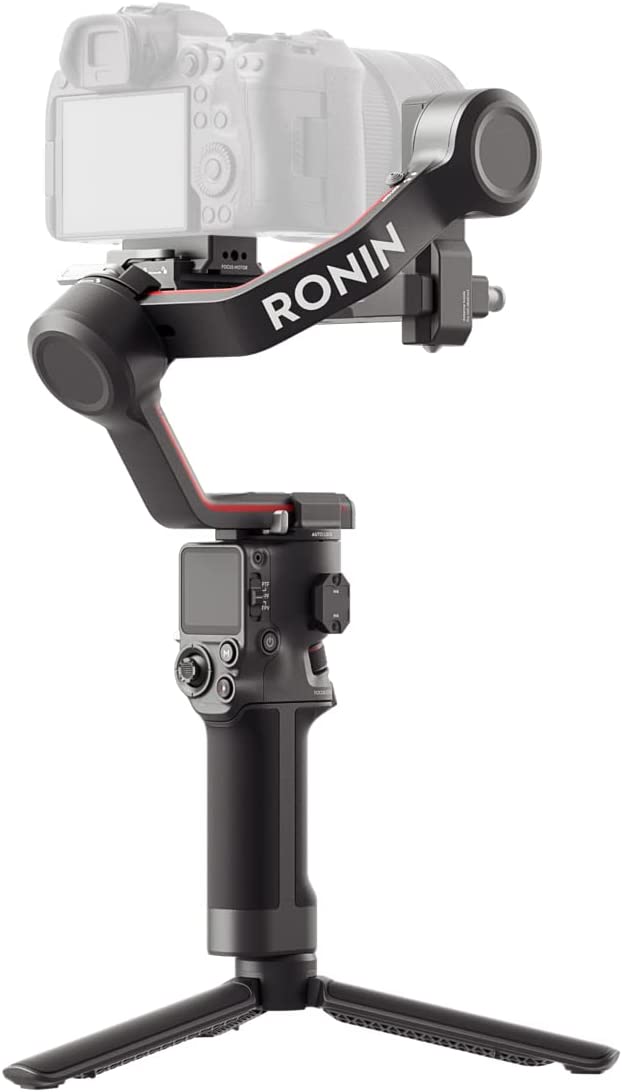
| DJI RS 3 (Best Overall)
|
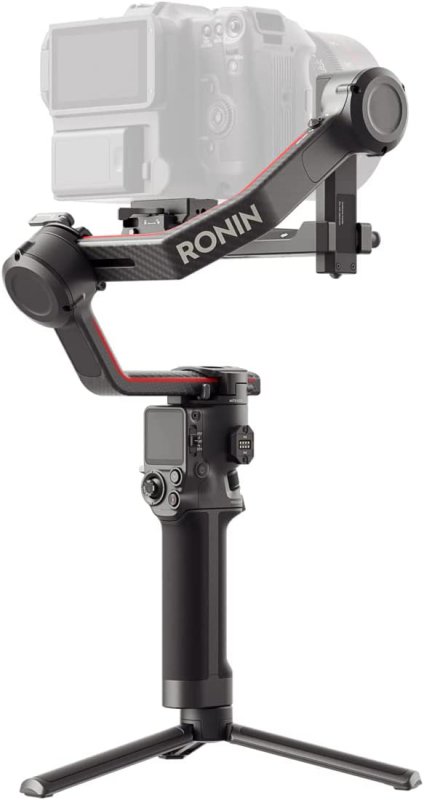
| DJI RS 3 Pro (Most High-End - High Payload Capacity with Advanced Features)
|
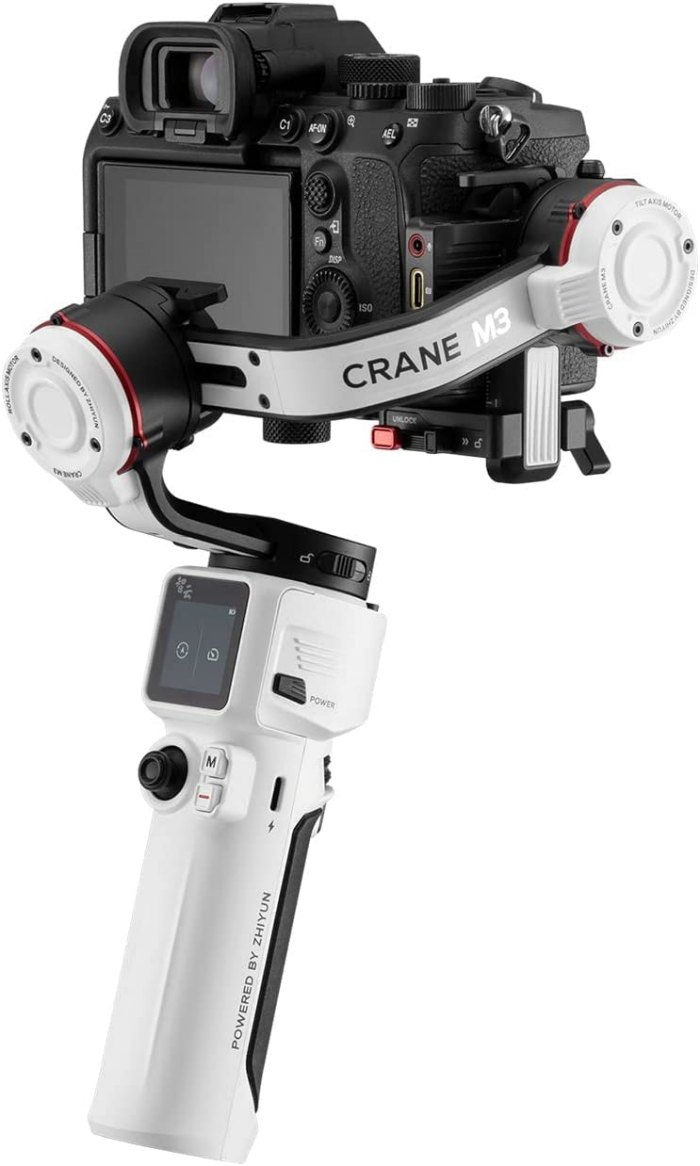
| Zhiyun Crane M3 (Budget Option with Less Features)
|
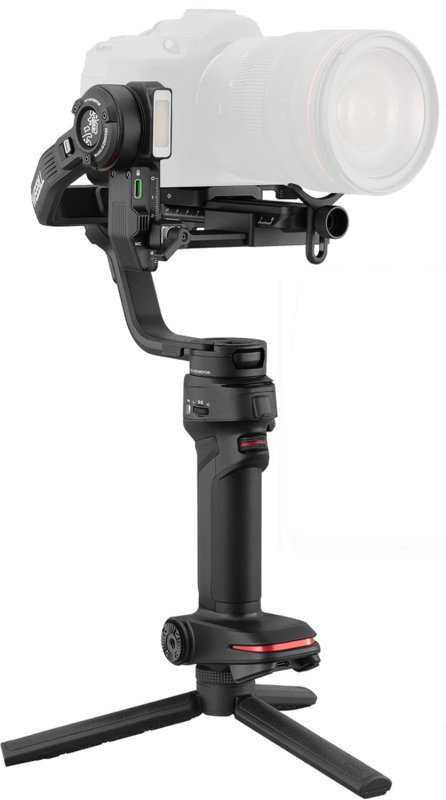
| Zhiyun Weebill 3
|
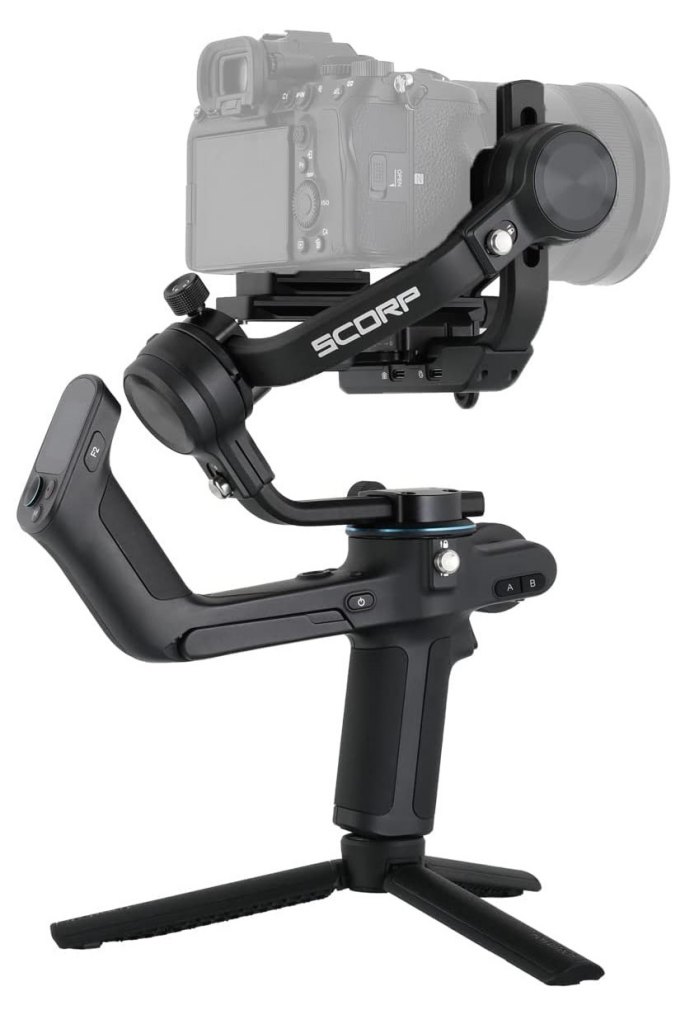
| FeiyuTech SCORP
|
Best Gimbal for Sony A7 IV
1. DJI RS 3 - Our Top Choice
DJI is a famous name in the world of digital gadgets, no doubt; The brand has been accompanying me for quite a while, as an effective drone, stabilizer, and other digital tool, but I couldn’t be more impressed than this ultra-special improved DJI RS 3 Gimbal.
The one rightful companion to my Sony Alpha 7 IV. Speaking of the experience, this gimbal has given me every right to be impressed, with the balance, the innovations, the function and so much more but what pleased me at the top is the cost of course.
Sony Alpha 7 IV, a gimbal that covers up with a high-performance aura, needs something lighter and versatile; DJI RS 3 qualifies for those special criteria. The new updates have brought so much like how light it feels in my hand, even after being paired up with Alpha 7 IV.
However, no matter how compact the gimbal is or how conveniently its 2.8-pound weight is, I still get to attach my additional accessories up to 6.6 pounds.
Magic, right?
There is a comprehensive list of cameras and smartphones that can be associated with this gimbal, but A7IV comes on the top.
Honestly, I have been worried about the installation of my camera because of the stabilizer’s advanced technique, but the most accessible double-layered quick-release plates have made things super easy for me.
I found this rare yet interesting how all three axes are adapted to be auto-locked and open with the function of the power button, giving more effortless control to the user.
The advanced shooting tool of Alpha IV and other gimbal settings can now be easily accessed through the wireless shutter control; this refers to dual-mode Bluetooth and other application usage.
Other than that, the fine-tuning knob and front dial have also eased my effort to adjust the setting parameters or experiment with shooting modes.
There’s no way you can doubt the picture quality the gimbal exposes because, for the record, I have got hands on some pretty striking footage, all because of the third-generation RS stabilization algorithm and its increased motor torque.
I would also like to mention how wonderfully the enhanced power of the gimbal’s battery has amused me enough. The batteries that can be charged even separately have given me straight 12 hours of runtime within a single day almost to complete my one-day shoot with the quickest charging ability that ranged in 2.5 hours all that productivity just to match the power performance of A7 IV.
Apart from the smartphone monitoring and control, I did enjoy the visionary approach of the gimbal black and white OLED screen sized 1.8 inches, enough to get the most comprehensive display of setting parameters.
The gimbal body is tough, much similar to the Alpha 7 IV, with the customizable dial at the outer, which is a big plus for me as I always prefer my gimbal to be highly durable.
Bottomline- With the all-intelligent function and an upgraded stabilization mechanism, this DJI RS 3 paired with Alpha 7 IV has given an interesting shooting experience, all within a reasonable price range; I suggest you try this.
Pros
- Effective compatibility with Alpha 7 IV
- Butter smooth footage
- Supports Raven Eye feature
- Intellectual functions and monitoring
- Widest OLED panel
- Updated better stability algorithm
- Integrated control dials and knob
- Auto Axis lock and quick-release plate
- Affordable price tag
Cons
- Time-taking installation
- Gimbals could be more durable
2. DJI RS 3 Pro - Advanced Pick
Sony Alpha 7 IV has quite a professional-level charm in itself, and its functions and performance need to be coordinated with the adequate gimbal that when this upgraded version of DJI ronin 3 steps in.
The gimbal is not entirely similar or not entirely different from its previous edition, but the engagement of some seriously advanced features has magnified its performance and outcome, which is why I have considered this magnificent piece as one of the best on the list; Let me brief you how.
Featuring exciting upgrades, this DJI RS 3 Pro has promised me one primary stability and convenience. Like the previous model, the whole mounting of my Sony Alpha 7 IV is no trouble at all with the courtesy of quick-release plates that ensure safe gripping.
On top of that, the auto-axis lock has benefitted a little more. Whenever the Alpha 7IV is mounted on a gimbal, I don’t have to manually lock the axis, all I have to do is press a little and hold the power button, and the gimbal axis locks and unlocks, securing the parameters.
Similarly to the previous edition, this one too has the up-to-date third-generation RS stabilization, one that works by providing 20% enhanced stability, but what caught my attention more is how a super smooth and balanced image from my A7IV captures expertise on all low-angle, dynamic or other shooting modes.
Also, like the previous gimbal, indulge in some fascinating wireless camera control features that prevent me from getting interrupted by the camera itself, and the highly engaging main menu of the A7 IV can be directly controlled through the remote monitor.
What significant difference that brought this lens here is I found this more convenient and versatile. The gimbal’s Active Track Pro feature is outstanding.
With this feature, I can directly monitor or track the subject on the gimbal OLED screen, not just to make the focusing easier and blend in with the super intuitive focusing of Alpha 7 IV, but the LiDAR compatibility benefits the most creative way possible.
The LiDAR focusing technology of the gimbal has the potential to project 43200 focusing ranging points within a specific area. With the phase and contrast detection of A7IV, this all-focusing stuff gets more interesting to shoot.
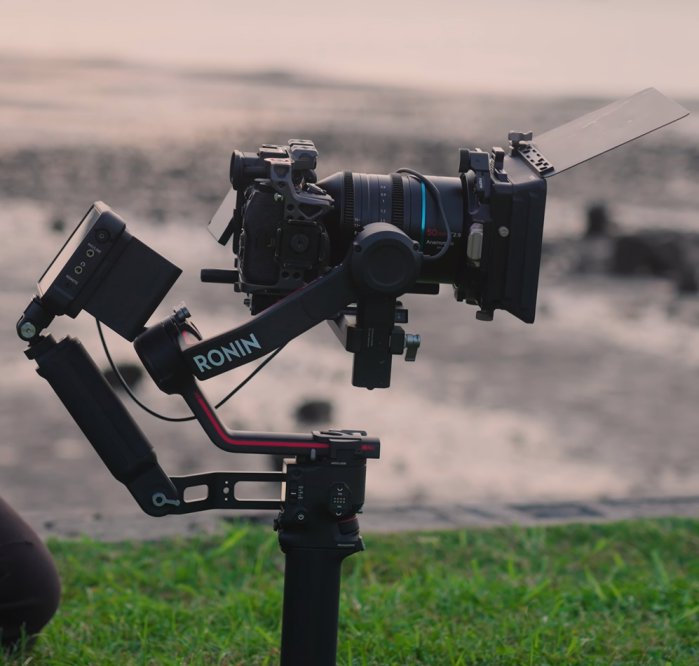
One thing I found more within this gimbal, it eliminates the usage of the Ronin image transmitter; because of this exception, the LiDAR range finder, I can quickly get the vision of images.
For the same point, the large OLED panel came in the front that sized equally 1.8 inches, but unlike the previous edition, it did feature a full-color panel with entire finger touch control to get 28% larger and better vision of the image.
One more thing I like the most is the Gimbal’s body of composite. The whole carbon fiber construction has great strength and firmness, one that matches the durability of Alpha 7 IV, but at the same time, this composite ensures the lightest weight of 3.3 pounds and increased stiffness.
The highest payload of 10 pounds can carry the lightest weight of 658 of camera A7 IV as well as the other additional accessories. The extensive input and output ports of the gimbals make things most effortless for connecting the additional accessories.
But Did I almost forget to tell you about the enhanced battery of the gimbal? I might have had doubts about the stabilizer battery, but over my expectations, the potent RS 3 Pro battery has made things exciting by providing 12 hours of runtime enough to get 520 shots by A7IV within a single charge, and with the courtesy of 18W quick charging, it took less than 2.5 hours to be full charge. What else do you want?
Bottomline- Containing intuitive and essential creativity and highly responsive abilities, this upgraded gimbal aligns to match the compelling features of Sony Alpha 7 IV conveniently. The price would feel a little higher but worth every penny.
Pros
- Easy remote and wireless camera control
- Super powerful LiDAR compatibility
- Durable Carbon Fiber construction
- The full-colored intuitive display panel
- Integrated outer front control dial and knob
- The highest payload with 20% increased stability
- Easy and secure mounting of Alpha 7 IV
- Up-to-expectation battery backup
- Expanded Input/output ports
Cons
- The high price might be an issue
- Takes a little time to understand
3. Zhiyun Crane M3 - Budget Pick
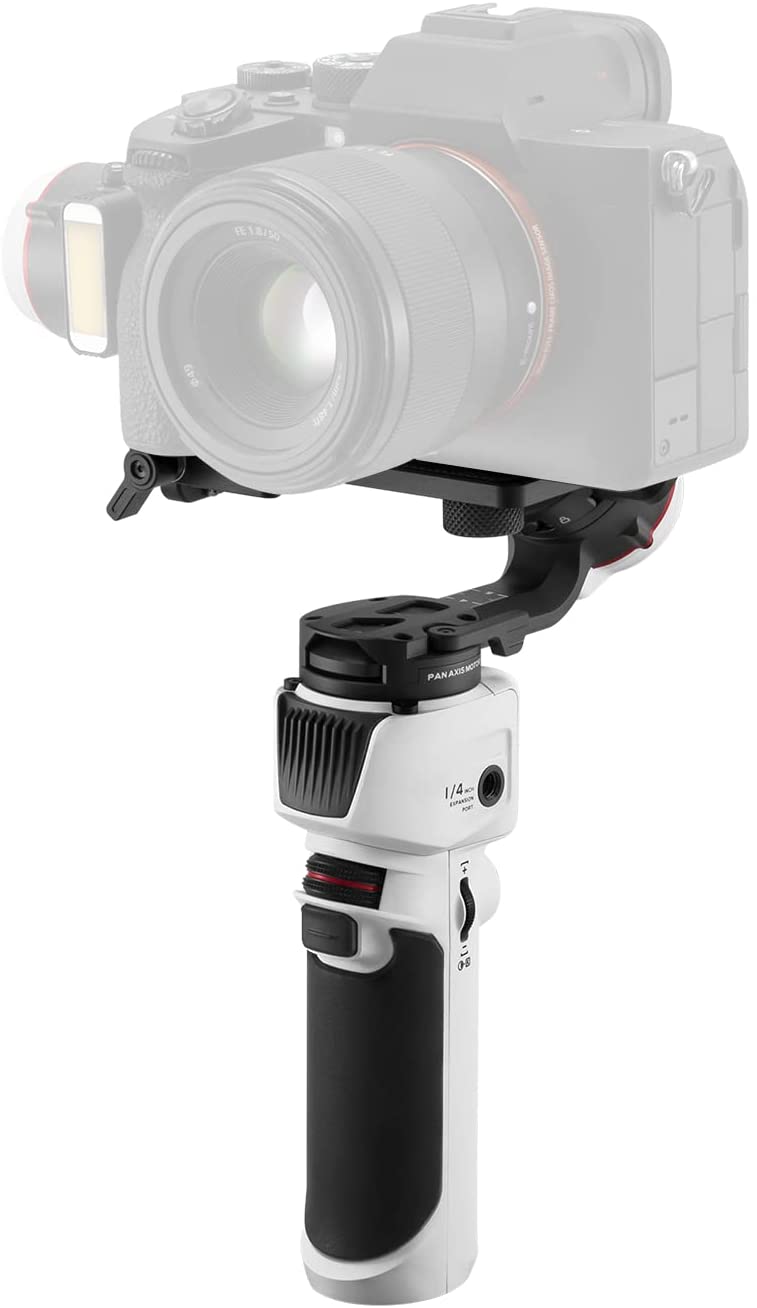
There’s no way I cannot list this exceptional beauty from one of my favorite brands, Zhiyun. If you are an old user of Zhiyun, you might have already learned how significantly the brand took versatility, performance, and ease as their top priority while making gimbal stabilizers; the same they have done with this Zhiyun Weebill model.
This is the key reason I decided to try on their gimbal when I brought my Sony Alpha 7 IV; keeping on point, the functioning of this gimbal with Sony Alpha 7 IV is a butterscotch cakewalk.
I feel on top of the world stating how easy it can be to balance your shot these days and that too without breaking the bank. I love the fact the gimbal with the least 1 pound can grant so much and handle the heavy function of my Alpha 7 IV effectively.
The brand has upgraded this stabilizer only to eliminate the problematic hefty body of its own, but the increased strong torque and the intuitive motor algorithm have guaranteed enhanced stability in the videos.
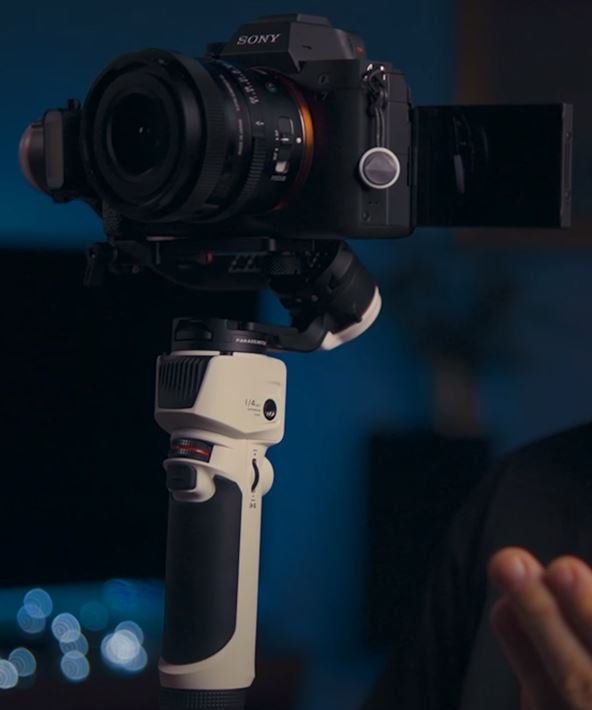
One of the most exciting parts of this stabilizer is it has some additional features, like a better low-light filming experience. I found out that with Crane M3 fill light-up filters and A7 IV auto ISO things get better and better during dark-hour filming.
Along with the fastest operation, I found a balanced exposure throughout the shot no matter if I was shooting pan-follow, lock, vortex, Go, or Point-of-view mode.
Things I have experienced amusingly is how the gimbal took an effort to attach the A7 IV on it; all you gotta do is switch off the gimbal or mount the camera.
With the company’s upgraded quick-release system, the balancing during attaching and detaching accessories with the gimbal stays steady. The gimbal’s newly updated design has a compelling look; I like the modernity of the white color and ergonomic body that also benefits in keeping things comfortable.
I have had such a great time with the visionary expertise of the stabilizer; The full-colored OLED panel sized 1.22 inches keeps me in touch with the direct functioning of tools. The full-touch control and advanced UI announced a better interface with a stabilizer as well as A7 IV.
Encapsulating tons of creative features, the operating capabilities of the gimbals and the camera last up to eight hours through the fastest charging 1150 mAh battery.
The quickest charging of two hours and the lowest power is another big plus for me because I usually carry a power bank to keep the power on the road.
Once you have secured the Alpha 7 IV on the gimbal, you will get the other control extremely easily and comfortably. Although the payload of the stabilizer gets a clear spotlight, I feel free to attach third-party accessories when required.
Things got even more interesting when I found out about the expansion base in the gimbal’s design, the expanded microphone connection port, and other input-output ports.
Bottomline- The quick releasing, super mounting, and better stability, all things can be done within an extremely pocket-friendly budget. There is no better experience of balancing with high-quality aspects, so just go for it.
Pros
- Super convenient Alpha 7 IV compatibility
- Compact size and lightweight design
- The easy, quick-release plate
- Countable different shooting modes
- In-built Fill light filter
- Broadest OLED color display
- Exceptionally budget-friendly
- Creativity expansion abilities
Cons
- Battery could be better
- Chances of fluctuation in dynamic shooting
4. Zhiyun Weebill 3
Please don’t get us all confused with the brand name; there’s a reason I have listed two productive stabilizers from the same brand. The thing is, when my precious jewel Alpha 7 IV is on the measuring board, I definitely don’t want to take any chances.
And like I said, Zhiyun comes in my favorite brand category; there is no way I am letting go of this Weebill 3 edition. This gimbal has a reputation for being the best for the Sony Alpha series camera, all after examining the stabilizer’s intuitive abilities and performance, one that I am going to discuss.
First thing first, what I like the most about this gimbal is its ultra-potent revised design; yes, the super functional L-shaped body of the camera stabilizer has the rarest tendency of steading on its own to give improved balance.
However, I found the improved Sling 2.0 engineering is even better. My experience with the Sony Alpha 7 IV was quite remarkable because I effortlessly mounted the camera on the gimbal, and things went on smoothly as a cakewalk.
Being light-weighted at 1.13 kg is the second biggest perk of the gimbal, while the compact ability to transform in size of A4 Paper stays the first.
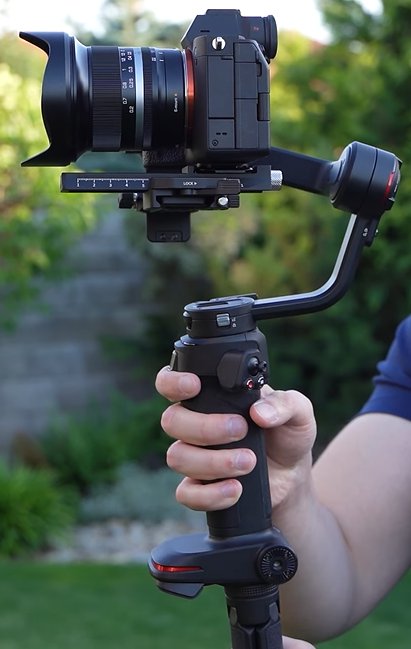
As per my vision, the engagement of upgraded dual-layered quick-release plates has taken the easy installing and dismantling of additional accessories in hand, almost after eliminating the possibility of rebalancing.
There’s that magnetic wrench available that keeps me gripped while the usage; this wrench has the design to mount the camera more firmly. Along with the mounting, I have faced no trouble in managing the stabilizer controls all through the intuitive character of cable control or wireless Bluetooth technology.
Apart from them, I pretty much get a hand on the highly responsive trigger button and wheel control. I have customized these accordingly with Weebill 3 and Sony Alpha 7 IV features just to adjust the parameters accordingly.
Now that we are discussing the operational features, let’s not forget to talk about the battery itself first.
One of the primary reasons I like this stabilizer is because of its powerful battery. The stabilizer in-built battery was empowered with 2600 mAh which gave me the most prolonged working of 21 hours; all with the quick charge technology that assured 2 hours of charging only.
There is something more unique inside the stabilizer; the Sony Alpha 7 IV is also known as the most fantastic performer when it comes to recording videos.
This stabilizer could be a big plus because it is associated with an integrated 3.5 audio port and an in-built microphone for cardioid recording.
Not just that, I can’t define how exquisitely I have experienced the low light filming with the stabilizer through the extra-circular Built-in Fill light filter of the stabilizer with customizable color temperature and 1000 lumens brightness.
Bottomline- I definitely would consider you to buy this piece of perfection because it has everything; the next-level improved sling grip and wrist rest design, upgraded motor, extra-potent battery, and artistic vibes through easy controls and all that or at least a few bucks.
Pros
- Super powerful battery runtime
- Integrated 3.5mm audio port
- Better low-light filming experience
- Optimized stabilization algorithm
- Reasonably budget-friendly
- Strongest and most versatile grip over A7 IV
- Most effortless gimbal controls and mount
- Exceptional Revised designing
- Butter-Ly smooth footage
Cons
- The app connection frustrated me a little
- Found jittering in certain shooting mode
5. FeiyuTech SCORP
Lastly, the least is one of the FeiyuTech creations; if you are a keen photographer, you might have crossed paths with this exquisite edition. There is no doubt Zhiyun has been ruling hearts in the market; all that comes from being highly advanced, innovative, and customer-convenient at the same time.
That’s all I learned about this extra-special gimbal. The fact that this stabilizer offers so much has literally placed me in a dilemmatic situation for beginning the appreciative details of its features.
Let’s start with the design; the stabilizer is better known for its engineering; in fact, the name has adapted from the shape itself. With reference to my camera Alpha 7 IV, I considered the lightest weight of 2.6 pounds pretty much helpful.
And to add the cherry on the cake, the stabilizer has got a rigid hold of Alpha 7 IV and other additional accessories as well through its ability to handle a 10.5-pound payload.
I couldn’t doubt the gimbal’s strength a little; the aluminum alloy and synthetic macromolecular resin have added charm to its design as well as secured the parameter of my camera as well.
In terms of power performance, indeed, this FeiyuTech SCORP dominates the competition with its 2500 mAh battery engagement; The one and only that gets mixed up with the supreme capability of 520 shot maker A7 IV and provides an uninterruptible 13 hours of power backup.
Additionally, the quickest charging of a 1.6-hour period has also won by heart in the corner. The stabilizer classifies being operational with the precise stabilization that came from the updated anti-shake algorithm, which I personally found quite amusing.
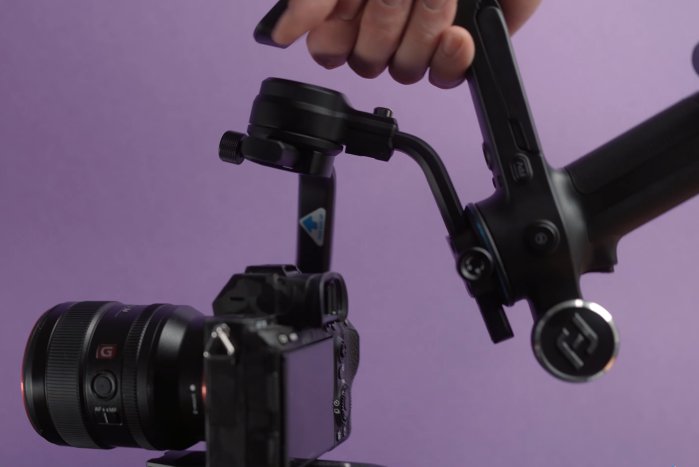
If we are talking about the whole camera mounting, I would like to mention that the style of the stabilizer hanging on the camera is a little different.
While adding Sony Alpha 7 IV, I repositioned the A7 IV below the handgrip, assuring improved stability; this is where the camera hangs below, unlike the other stabilizer top securing mechanism.
Keeping my Alpha 7 IV towards the floor has an open creative possibility of catching better low-angle shots.
All the configured controls of the camera, as well as the gimbal, can be managed by the wheel control, one that can be rotated to fix the parameter or even access the Alpha 7 IV ISO, shutter speed, and other features.
With the power attachment of A7IV, I have got to explore significant artistic automated modes like balance calibration, easy horizontal to vertical flip, dolly zoom, rotation, and other essentials like panorama and timelapse mode.
This thing can be easily visible on the largest, fully colored display panel that is sized 1.3 inches to preview what the camera’s eyes see.
Bottomline- Professional or beginner, you can achieve impressively smooth shots with this magnificent beauty, the ergonomics, the smooth shots ability are wonderfully amusing. In contrast, the extreme, most vital compatibility with Alpha 7 IV features has won my heart already, so don’t miss the opportunity; try this stuff now.
Pros
- Firmest compatibility with Alpha 7 IV
- Improved low center of gravity
- Adequate battery runtime
- Super Automated modes
- Straightforwardly effortless controls
- Lightest weight and balanced
- Better stabilization algo
- Easy navigation with a screen
- Comes with a convenient carry case
Cons
- Packaging is fragile
- Sometimes the poor user interface
What are the benefits and limitations of Gimbals?
A gimbal is a device that allows you to keep the camera stable while shooting photos or video; it allows for capturing sharp and more focused high-quality images.
Gimbals don’t have the reputation of being used as an essential, but in reality, most professional photographers prefer using the same because it helps them improve their photography skills and image quality.
Even with the camera associated with an in-built stabilizer, the professional relies on using the additional stabilizer in the name of better quality. There are some profound benefits of the gimbals recorded; let’s have a look-
- The gimbals are an advanced tool that guarantees stable and quality images
- Gimbals are lightest weighted and easily mobile to carry on any adventure
- They enhance creativity by availing tons of artistic shooting modes (Timelapse, 360 Inception, and others)
- They ensure the strongest hold of your camera, preventing any accidental fall
- They let you enjoy and frame the thrill of adventure, much likely underwater, aerial, and much more
- They are a qualified master tool for shooting videography with more balance and clarity
- They can be quickly set up and don’t require professional help with unboxing and installing
- They are pretty much the easiest to control, and they effortlessly reduce your manual work
- Gimbals do have the feature of getting connected with the mobile phone application.
Have you heard the term, “Nothing comes perfect”, so does this gimbal. there’s no way you can only rely on Gimbal’s positive character; there are some limitations of this productive tool that do come aligning; let’s have a look at the same.
- In other ways, gimbals are considered an extra expense to the photography because they cost a lot
- Needed to be carried as an additional attachment while moving around or travel
- The whole setting and calibration of an advanced gimbal doesn’t come easy
- The proper usage of the gimbal needs proper practice
- Some people believe the gimbal adds extra weight heil filming the steady scenario
Prime features of Gimbal that one should look at before the purchase
An entry-level or professional, are you serious about your image and video quality? Just tap on the gimbal for the same. The million-dollar question is, how would you know that the gimbal is perfect for Sony A7 IV?
What is the major character that defines the versatility or being high-function aura of the gimbals? Do not worry; I have an answer to that too.
There are some utterly crucial features listed here that make a gimbal a perfect gimbal. These features can also be used to analyze an ideal purchase.
Convenience of fitting- First things first, a gimbal is useless if it doesn’t have an adequate match with the camera function. The key to a perfect gimbal is one that fits like a limb with the camera you desire to mount. In this case, I prefer the gimbal with moderate size and better compatibility with the Sony Alpha 7 IV; that’s what is called the ideal gimbal.
Weight of Gimbal– The key card played by the weight of the gimbal in making things perfect; you can’t enjoy the amusement of shooting for a longer period if the gimbal’s own body is heavy. Therefore, if you desire the ideal model of the gimbal, make sure you get your hand on the compact and least-weight model.
Potential to carry tools– The next very thing that is listed at the top is the ability to carry weight, the payload. What makes a gimbal perfect is it can carry a lot more additional accessories. Getting a maximum payload in a gimbal grants freedom not only to carry additional tools but also to engage with a heavy advanced camera. So, ensure that.
Working period- How are you supposed to appreciate the feature of a gimbal if it keeps switching off often; this is why another dominant factor that makes a perfect gimbal is the potent battery. Remember, the productive battery needs to be rechargeable, removable, durable, and of course, one that provides the most extended runtime and takes the shortest charging period.
Strength of Gimbal– You can tell a lot more about the gimbal with just a single glance; one thing that needs to be there in your perfect gimbal model is strength and power. So make sure your future gimbal would have the most vital composition, durable body, harsh-climate protection layering, and rigidness; one that gives a grand impression.
Usage– You can’t express something praise without actually enjoying it, right? So, another thing that makes the gimbal perfect is how easy it is to be used. The gimbals, the whole mounting, balancing, and controlling can be really hectic, but that’s a non-ideal gimbal; If you desire to get the perfect Gimbal, you need to be assured that the control is user-friendly and accessible.
Expense to count- Even loaded with enormously featured gimbals fail to qualify the criteria of a perfect gimbal if it doesn’t come in your ideal budget. So, the ideal gimbal is the one that doesn’t associate with the highest expense and does include all your desired features in a budget-friendly figure.
Sony Alpha 7IV and its notable creative aspect-
I must have lost count of the high-performer and advanced cameras that came from Sony Treasury; The brand has gained a massive fandom for its unrivaled competency in making some wonderful shooting appliances.
I personally prefer Sony cameras and lenses whenever I look over the highest-resolution imagery.
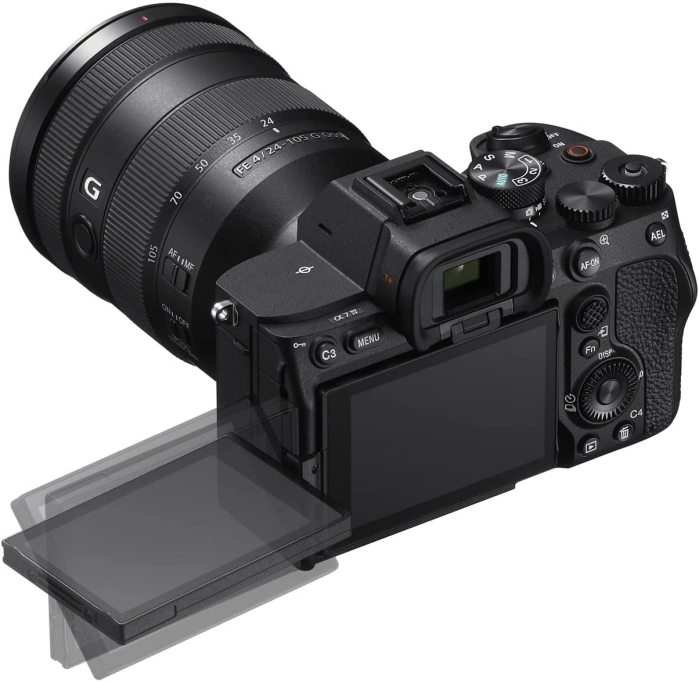
Fulfilling my desire to use a powerful, most advanced camera, Sony creatively launched this almighty, ultra-potent full-frame mirrorless camera that came from the Sony fourth generation series consuming the maximum competency of their professionals.
Over the brand’s third-iteration series lane, this versatile camera knocked on the door in October 2021, surrounding all the successful updates and features.
The camera is all about the highest-quality images, all for better performance and the most effortless control. Considering all the essentials, you might have assumed the highest price range of the camera as well, just like me; but to your relief, it does have a pocket-friendly budget of $2499 for the body only.
The improved inner mechanism of the camera brings the most fascinatingly engraved specification; those super advanced characters that hold the power to captivate anyone with their Miraculous innovation.
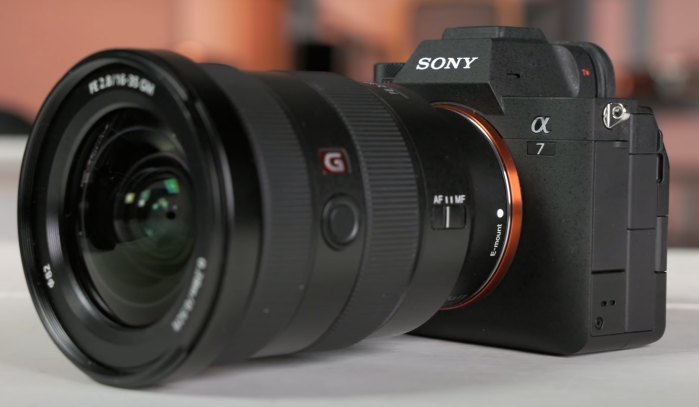
To brief, Let’s have a quick look over the unique features of the Sony Alpha 7 IV that make it super convenient and versatile-
- The advanced full-frame camera has the SLR-style mirrorless body type and BSI-CMOS sensor type.
- The effective sensor of the camera has a 33-megapixel resolution that guarantees the most flawlessly still shooting imagery.
- When it comes to videography, the camera’s potential to shoot Ultra HD 4K video at 60p is quite amusing; while the 4K shooting stays at 60p and Full HD shooting at 120p.
- The camera has a spectacular approach over dark-hour filming, and the auto ISO and Plus/minus 5 exposure compensation give a hand in that. The ISO sensitivity ranges from ISO 100 to Iso 51200, which can be expandable to ISO 204800.
- In terms of focusing, the camera provides both auto and manual focusing with 759 phase-detection points and 425 contrast-detection points to explore different focusing modes.
- With the means to provide better vision, the camera includes a built-in electronic viewfinder sized 0.5 inches, one that has 3.6 million dot resolution and 100% coverage with 0.78 x magnification.
- Apart from that, a fully articulated LCD panel is the one that gives the most comprehensive vision because of its largest 3-inch size and 1036k resolution. This screen is TFT type, and it can be controlled via fingertip.
- The camera allows both a Mechanical Focal Plane shutter and the electronic shutter which works dedicatedly to give up to 10 frames per second continuous shooting speed up to 828 frames.
- The camera includes an effective sensor-shift 5-axis image stabilization that minimizes the camera shake with 5.5 shutter stops and crafts a precise, balanced image.
- The camera comes with an in-built stereo-type microphone, one that benefits clear audio recording while shooting video.
- For storage, the camera indulges two different slots, one that supports CFexpress Type A or SD card with UHS-II bus format and a second slot for SDXC or SDHC card with UHS-II bus format.
- The camera guarantees the most extended hour of operation, which can be possible because of the one NP-FZ100 rechargeable lithium-ion battery empowered with 2280 mAh to give approx. 520 continuous shots in a single charge
- For easy and intellectual connectivity, the camera uses in-built Bluetooth and Wi-Fi technology; also, there is the supreme USB
- Type-c port configured on the barrel for the quickest charging of the battery.
- The camera does have the most vital physics, a durable body that uses magnesium alloy to grant rigidity but keeps the weight low along with the effective environment sealing factor.
- The camera does include the lightest weight, figured at 658 grams only, including the battery and recording media attachment.
Frequently Asked Questions (FAQs)
Q. Is a gimbal good for stills?
Basically, gimbals are designed to help you capture the dynamic subject movement or fast-moving scenario; this usually falls under their expertise. I don’t believe they have much of a role in shooting still photography. As per my knowledge, their major doing is to help the camera stay steady and minimize blur and shakiness; within the still shooting, there is no place for such troubles, which cuts out all the work that the gimbal actually does. However, there are some beliefs that the gimbal can enhance the picture quality of still images as well.
Q. What is the best gimbal for Sony Alpha Iv?
There are a lot more options in the market, and the top five have been listed by me only in this guide, but if you ask me, I prefer the DJI RS 3 Pro as my best choice for Alpha IV. Yes, I know that it is associated with a slightly higher price range, but considering the valuable features and functioning it provides, I found every single penny worth it. The carbon-fiber construction, the LiDAR compatibility, the extended power runtime, the active tracking, and much more have been ruling my heart since the day I caught a glimpse of the same. However, any other gimbal with moderate payload, not much cost, or even function can make the best fit for Alpha 7 IV.
Q. Can a gimbal enhance my image quality?
That’s what a gimbal does, it’s all devoted to looking after your footage and making sure it’s wrapped within the highest-quality factor. The gimbal has placed the appeal in polishing sharpness, steadiness, and professionalism in the image by employing the basic tactic. These gimbals eliminate any chance of camera shake which results in catching no blurry or jittering movement and all you are left with is the sharpest detailed picture with smooth balance surrounding; that’s how they benefit us with better imaging quality.
Q. 2-axis or 3-axis, which is best for Sony Alpha iv?
Even an entry-level photographer can answer this question pretty easily; the 3-axis gimbals are best to be paired with the Sony Alpha 7 IV camera. This is because Alpha 7 IV is termed a high-tech advanced camera, and the 3-axis gimbal can do professional photography by embracing all three shooting modes (pan, tilt, and roll), which cannot be said the same for the 2-axis gimbal. Also, the 3-axis gimbals are considered the lightest weight, most balanced, and cost-effective as well and they are synchronized with the modern features that 2-axis gimbals have been lacking.
Wrapping up
Summing up the whole article, I would say you must have collectively stored the insight towards the best gimbal for the Sony Alpha 7 IV camera. Along with my favorite entries, I tried to put things clearer in front of you by explaining how one should get the ideal gimbal for their advanced camera; I believe it’s easier this way now.
Easier to get a hands on a fully-featured rightful gimbal for your camera, and easier to invest your money somewhere worthy.
However, I just want to put one more thing at the end; some people generally made the purchase being befuddled by the gimbal appearance or its heavy functional character while all they needed was a simple stabilizer.
Do not make the same mistake. Invest your money in that only place where it is worth investing. Do not pay for something you don’t require. Make the decision wisely.
Do not wait for more; grab the ideal stabilizer model from the market and get started with the shooting already.